Starting in September 2026, I will be a postdoctoral research fellow at
ETH Zurich, working on my project
"Combinatorial and algorithmic methods for random polynomial
optimization" in
Afonso Bandeira's
group.
My research interests lie in theoretical computer science, with a
focus on approximation algorithms, their connections with statistical
physics and random matrix theory, and applications of continuous
methods to discrete mathematics.
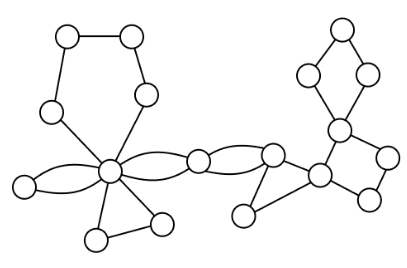
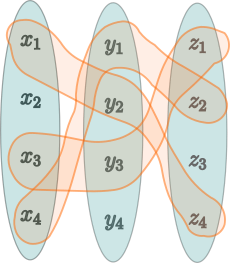
We resolve a conjecture of Feige (2008) concerning the optimal
tradeoff between density and girth in hypergraphs, generalizing
the classical Moore bound for graphs. Our main technical
ingredient is a new application of the polynomial method in
combinatorics.
Inspired by a generic decomposition result of Talagrand (2021),
we determine the sparsity level at which Erdős-Rényi hypergraphs
exhibit a spectral gap. Our proof overcomes the polylogarithmic
losses in the dimension that arise in standard approaches to
bounding the injective norm of sparse random tensors.
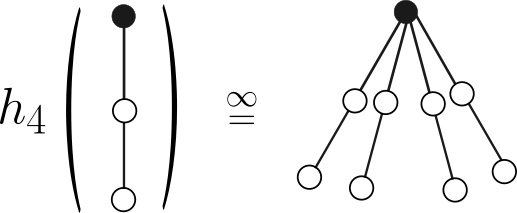
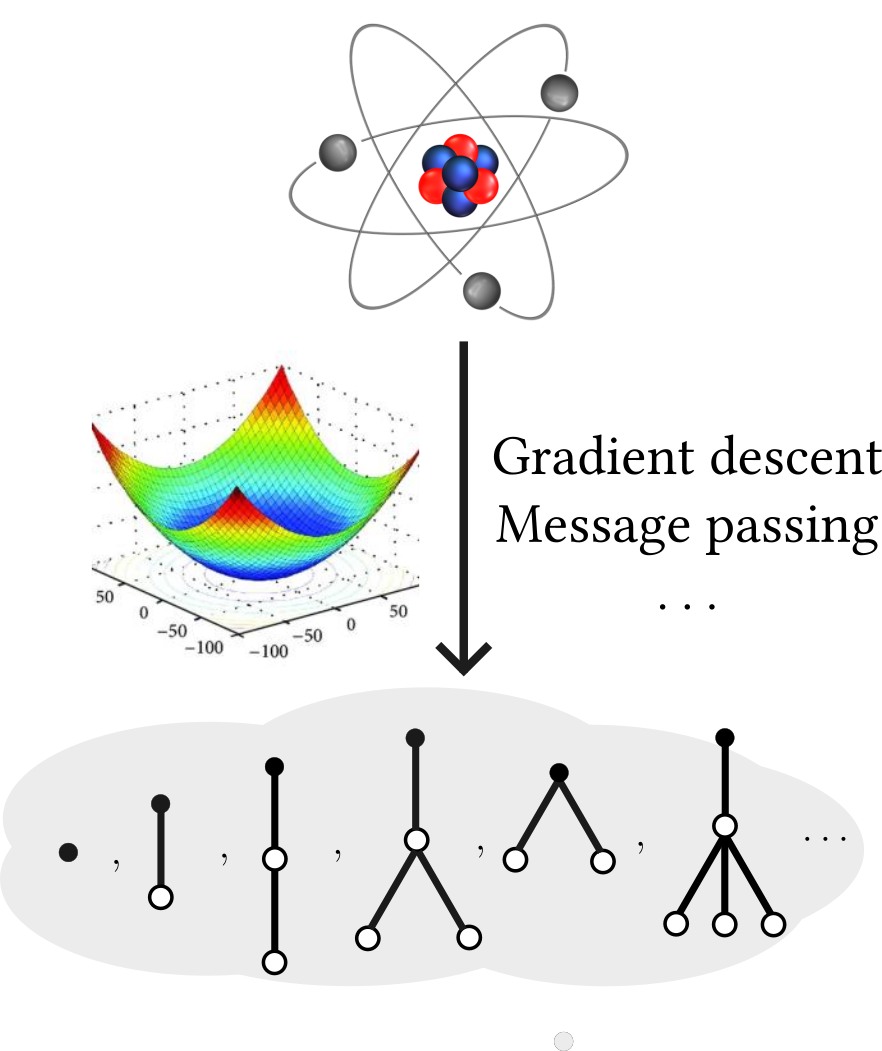
We study the dynamics of first-order methods through the limiting
traffic distribution of the input matrix. This yields the first
analysis of Approximate Message Passing on
deterministic matrices, partially resolving conjectures of
Marinari, Parisi, and Ritort (1994), and a new general
AMP iteration whose limiting dynamics are conditionally Gaussian,
answering questions of Wang, Zhong, and Fan (2022).
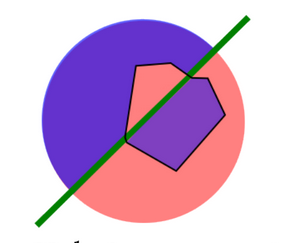
We establish a tighter connection between how well the indicator
function of a set can be approximated by low-degree polynomials in
Gaussian space and the Gaussian surface area of that set. As a
consequence, we obtain improved agnostic learning algorithms for
several classes of concepts.
We introduce a new approach for analyzing
nonlinear iterative algorithms on random matrices using Fourier
analysis. As the dimension of the input matrix goes to infinity,
the Fourier basis simplifies, allowing us to implement heuristic
reasoning based on the cavity method into rigorous arguments.
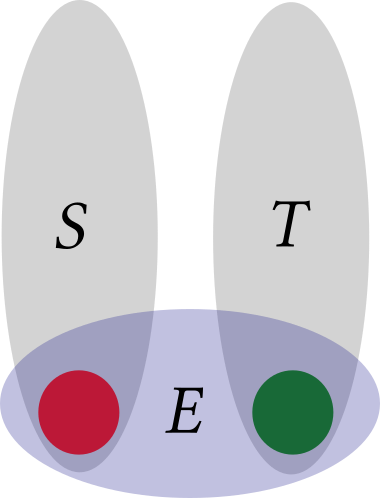
We present rounding schemes for SDP relaxations of the problem of
maximizing cubic polynomials over the hypercube or the sphere,
complementing the well-developed theory for quadratic polynomials.
This answers a question posed by Trevisan (2021) on the existence
of certificates for the optimum value of cubic polynomials
matching the guarantees of a search algorithm of Khot and Naor
(2007).
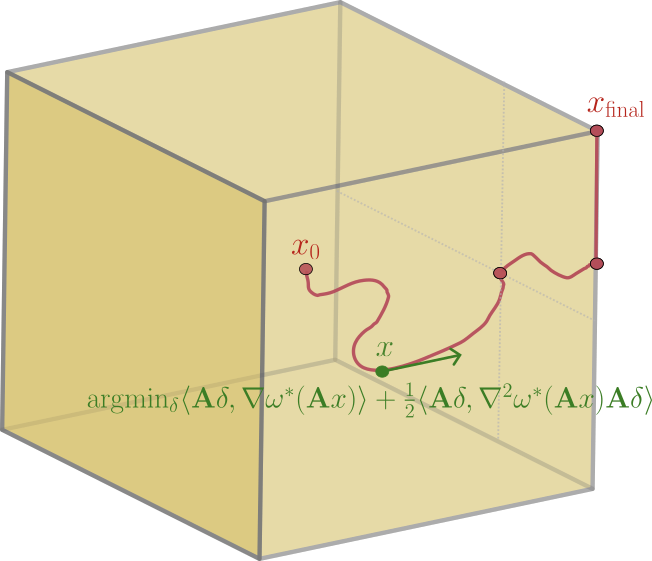
We analyze a new algorithmic framework for discrepancy
minimization based on regularization. We demonstrate how varying
the regularizer allows us to reinterpret several classical
results in discrepancy theory, ranging from Spencer's theorem
(1985) to Banaszczyk's bounds (1998).
Errata: In the proceedings version, we incorrectly
claimed that our algorithm achieved a constant of 3.7 for Spencer's
problem. In the updated version, we prove a constant of 4.1.
The union bound is a classical tool in the probabilistic method
for proving the existence of objects with extremal features. In
my Ph.D. thesis, I explore an alternative approach: proving
existence through the design and analysis of algorithms from
continuous optimization that explicitly construct these
objects.